Changing the World…. One Project at a Time: The Importance of Water
EA/UNCW Think-Care-Act Project Partnership.
EA/UNCW Think-Care-Act Project Partnership.
Introduction:
Dr. Elizabeth O.
Crawford, an education professor at University of North Carolina Wilmington,
and Susan Gelber Cannon, a middle school teacher, author, and developer of
Think-Care-Act Projects, are pleased to present our second collaborative year
of sharing Think-Care-Act-Projects [TCAP].
Our EA/UNCW Think-Care-Act Project Partnership
allows Episcopal Academy sixth graders and Dr. Crawford’s senior UNCW
pre-service education majors to consider personal qualities and talents,
identify passions for social change, and act to change the world for the
better. Through video sessions, my students and those of Dr. Crawford
have inspired and encouraged each other to make a difference.
Below, and for the next
few blog postings, you will read future teachers’ guest blogs about their
TCAPs, with links for research and teaching suggestions. Happy reading and thinking, caring, and
acting!—Sue Cannon
THE IMPORTANCE OF
WATER: Think-Care-Act Project
By Aspen Allen, Cara Comer, Elisabeth Sprague, and Karlie Wright
University of North Carolina at Wilmington, May 2016
The Importance of Water
We are Elementary Education majors at
the University of North Carolina Wilmington. For our social studies methods
course, we all took part in a service project, referred to as the “Think, Care,
Act Project” (TCAP). Together we worked towards saving the water that is
polluted as well as the water that is purified.
Water Facts

Water
is the most important resource on the planet. We use water to cook, swim,
drink, clean, and survive. However, one
out of every ten people does not have access to clean and safe water. When clean water becomes scarce, diseases are
more likely to spread. In fact,
according to The Water Project, one out of every five children dies due to a
water-related illness (Water Project, 2014). Education becomes more elusive because schools
cannot stay open if they cannot provide access to water for students, staff and
family (Water Project, 2014). Hunger
increases because without water things such as livestock, gardens, fresh fruits
and vegetables become scarce, resulting in hunger. When all of these things
combine, poverty takes over. This becomes
a vicious cycle for many generations.
Over
the years, marine pollution has also become a problem in our world (EPA, 2015).
Eighty percent of marine pollution comes from a land-based source, which
illustrates that each consumer impacts our waters (NOAA, 2016). Marine pollution consists of harmful chemicals
and particles and industrial, agricultural, and residential wastes (NOAA,
2016). More than one-third of the waters
of the United States are affected by coastal pollution (NOAA, 2016). In our country, forty percent of our
population lives on the coastline near polluted waters. The constant rising sea
level, climate change, and growing population are causing quite a challenge for
our coast (NOAA, 2016).

One of the biggest sources of marine
pollution is called nonpoint source pollution due to runoff. Nonpoint source pollution includes runoff from
septic tanks, cars, trucks, and boats, plus larger sources, such as farms,
ranches, and forest areas (EPA, 2015). Millions
of motor vehicle engines drop small amounts of oil each day onto roads and
parking lots, which then wash into the sea after rains. The worst type of
pollution to the marine environment is fertilizer
and pesticides (EPA, 2015). These toxins
come from soil that runs off from farms into rivers and eventually into oceans.
Nonpoint source pollution can make river
and ocean water unsafe for humans and wildlife (EPA, 2015). In some areas, this pollution is so bad that
it causes beaches to be closed after rainstorms (NRDC, 2016). Water pollution also consists
of many kinds of trash that is thrown away. The top most commonly found objects
include fishing nets, cigarette butts, plastic bottles, plastic bags, drinking
straws, aluminum cans, bottle caps, food wrappers, and glass bottles (Olley,
2014). Ocean pollution also consists of
industry and farm run offs including chemicals, pesticides, and waste
(Hubpages, 2015). Sewer systems, septic
tanks and oil spills are also being dumped into the ocean daily (Hubpages,
2015).
Solutions
 Thankfully there are several organizations today that make
it their goal to keep pollution out of the water. One organization that makes a positive
difference is the Freshwater Society (Freshwater Society, 2016). This organization was initiated in 1968 and
strives to educate people about water pollution and how to preserve clean
water. They accept members and donations
to help them spread their messages. The Freshwater society focuses on helping
people understand how to protect, enhance, and restore freshwater sources
(Freshwater society, 2016).
Thankfully there are several organizations today that make
it their goal to keep pollution out of the water. One organization that makes a positive
difference is the Freshwater Society (Freshwater Society, 2016). This organization was initiated in 1968 and
strives to educate people about water pollution and how to preserve clean
water. They accept members and donations
to help them spread their messages. The Freshwater society focuses on helping
people understand how to protect, enhance, and restore freshwater sources
(Freshwater society, 2016).
Other than donating to organizations that work towards
providing clean water, people can do simple tasks to help keep pollution out of
the water. To keep plastic out of the ocean, people can reduce how much plastic
they use. They can buy reusable shopping bags to use repeatedly thus
diminishing the use of plastic bags. Plastic bags too often end up in the ocean
and contribute to water pollution (Skye, 2016). To help with the trash debris in waterways,
the most beneficial and easy action to stop littering. If litter is spotted in
a public place, picking it up and disposing of it properly lessens the chance
of it ending up in the ocean. Beach clean-ups can be held with the help of
family, friends, or even organizations (Skye, 2016).

To help keep chemicals and oils from being released into our
oceans, people can also take action. One simple way to help is to dispose of chemicals
properly (Skye, 2016). People have many
ordinary chemicals in their households, like bleach or paint. To avoid
disposing of those chemicals in an unethical or unecological way, people should
call a local chemical recycling resource to know what action they need to take
to dispose of their chemicals safely. Many communities have safe disposal
options that scheduled regularly. Oil
pollution in the water is another substance that humans can do their part to
prevent. Automotive oil can leak and runoff to waterways. This is a problem when there are millions of
cars on the road. Keeping machinery in
good working order will help decrease the chances of oil making its way to the
ocean (Skye, 2016).
Our Actions

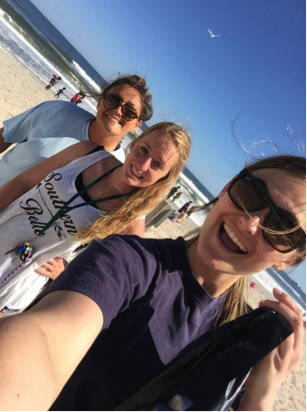
Aspen: I took action by
doing multiple beach cleanups; using reusable grocery bags instead of plastic
bags; convincing my friends, siblings, and parents to purchase reusable grocery
bags; continuing recycling; and using Tupperware containers instead of Ziploc
bags. I also informed my friends and family of the dangers of plastic bags and
shared eye-opening statistics with them about marine pollution. In addition, I keep
the beaches in my hometown clean and volunteer for the Sea Turtle Sanctuary in
my hometown to keep these turtles clear of dangerous pollution on the beach as
they make their way home to the ocean after breaking out of their shells.
Karlie: I took action by
participating in beach cleanups and reducing the amount of plastic products I
use. I raised awareness by teaching a
lesson to my first grade students about the dangers of pollution. Through my church, I also lead a second grade
small group, and we will be hosting a beach sweep.

Elisabeth: One
action I took was at the restaurant I work in. My coworkers and I were constantly throwing
away items that could have been recycled. I encouraged recycling by placing a recycling
bin next to our trashcan. My motive was
to lessen the amount of trash that ends up making its way to the water. I purchased reusable bags at TJ Maxx for just
ninety-nine cents each to avoid contributing to the number of plastic bags that
end up in the water. I also taught a second grade class a lesson on water
pollution and shared with them the causes and solutions to it. After I taught
the lesson, I had students create an advertisement on what to do to prevent
water pollution.

A student’s advertisement from the water pollution lesson!

Second Grade Beach Cleanup in Impact Zone
TEACHER RESOURCES:
- http://gironlife.blogspot.com/2010/04/experiment-can-you-undo-water-pollution.html
- https://www.youtube.com/watch?v=93BqLewm3bA
- http://www.goodreads.com/book/show/2863638-oil-spill
- http://lookingglassreview.com/html/blank44.html
- http://www.treehugger.com/natural-sciences/infographic-the-unbelievable-scale-of-marine-trash.html
- http://gen.uga.edu/documents/water/Earth.pdf
- Information
on Think-Care-Act Projects:
- http://thinkcareact.blogspot.com/2014/11/change-world-local-global-think-care.html
References
Five
Reasons We are All Connected to Oceans | The Nature Conservancy. (2016).
Retrieved March 20, 2016, from
Freshwater Society (2016). Our society. Retrieved from http://freshwater.org/about-the-society/
Skye, J (2016). How to stop water pollution. Retrieved April
7, 2016 from http://greenliving.lovetoknow.com/How_to_Stop_Water_Pollution
Sources
of Beach Pollution. (2015). Retrieved April 01, 2016, from http://www.epa.gov/beach-tech/sources-beach-pollution
The water project. (2014,
August 12). Facts and Statistics about Water and Its Effects. Retrieved March 23, 2016, from https://thewaterproject.org/water_stats
Water
Pollution. (2016). Retrieved April 01, 2016, from http://www.nrdc.org/water/oceans/ttw/faq.asp


